April 5, 2026 — Chichaqua Bottoms Greenbelt
Easter Sunday Birding Field Notes
An Easter Sunday trip to Chichaqua Bottoms Greenbelt yields a number of species.
For the first time in quite a few days, the sun was shining and the skies were clear and blue. Previous rains had left the roadside ditches and agricultural fields filled with standing water, but today promised to dry some of that out and bring slightly warmer temperatures. As I made my way from home to Chichaqua Bottoms, I was hopeful to catch the first signs of spring migration and perhaps spot some waterfowl along the way.
Park Entryway and Nearby Tree-lined Area
As I proceeded down NE 80th Street towards the park entrance, I encountered the usual Red-winged Blackbirds staking their claim to various sections of prairie grass growing on either side of the road. A small bridge crosses what appears to be an irrigation ditch running a straight path towards the eastern side of the Old Channel. There I came across three Rock Pigeons exploring along the bridge railing. They flushed as I approached and, in a wide arc, returned to the bridge after I passed.
At the end of the road where NE 80th Street meets NE 126th Avenue, I pulled into the parking lot typically used by visitors to the shooting range. The lot is bordered on the west by a stand of trees and can often be a productive spot for sightings, so long as the range is quiet. I noticed park staff had taken down a number of trees near the lot, thinning out the woods considerably. I sat quietly and watched from the van for signs of movement.
Suddenly, to the south closer to the Skunk River, two larger birds flew upward into the trees. At first I thought I might be looking at a Pileated Woodpecker, but the body shape was stockier and there was none of the prominent red I would expect. I believe what I actually saw were two ducks. They were too far out for a definitive identification with binoculars, but I later confirmed with my field guide that they could well have been Wood Ducks making their way to nesting cavities in the trees.
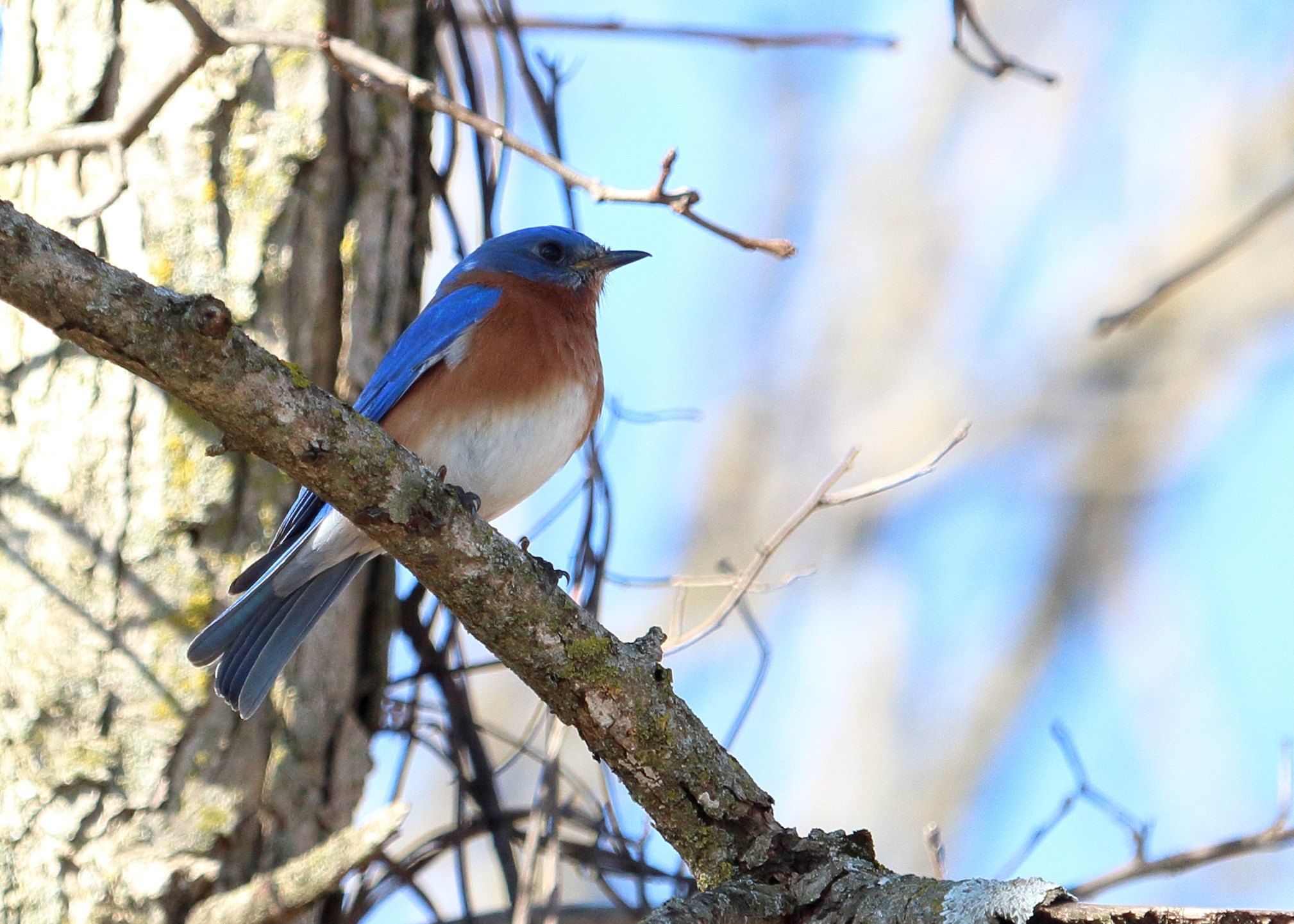
While sitting I also spotted a handful of American Robins chirping and carrying on, a Red-headed Woodpecker working at a cavity it had excavated in an oak, and heard the distinctive call of a Northern Flicker moving between the trees. Then in a flash, two bright blue Eastern Bluebirds whooshed past and landed on a nearby branch. One dropped to the ground to forage near the parking lot edge before heading south — giving me a nice long look in the process (see photo).
Area 3 - Youth Camp Ground
As I left the range parking lot and made my way east on NE 126th Avenue, a Turkey Vulture was in the road feasting on the latest roadway casualty. I stopped at the parking lot near the vacant youth campgrounds and took a stroll north along the Old Channel as it snaked through the area. Red-winged Blackbirds were calling throughout, along with one rather annoyed-looking Canada Goose — no doubt less than thrilled to see me in what had been a previously deserted stretch. As I walked, a Great Blue Heron flew through following the channel before clearing the treeline and heading further north out of sight. I couldn’t help but marvel at how dinosaur-like they always appear — like a pterodactyl making its way through prehistoric skies. I was also lucky enough to catch the song of a Rusty Blackbird. It appeared to be making itself known to the local Red-winged Blackbirds with its distinctive calls as it perched high in one of the adjacent trees. A number of robins and Dark-eyed Juncos were also working through some brambles near the waterway.
Dog Training Area
Next stop was the dog training area further east. I made my way up the road that loops near the water, where six Blue-winged Teal were floating together along a calmer stretch. Among them was one lone Redhead — a first sighting for me. Its rounded cinnamon-colored head and gray body made it stand out clearly among the teal. Near some small bushes, a male and female Cardinal were flittering around each other alongside a handful of Dark-eyed Juncos foraging in the grass. I parked here and made my way to the nearby bird blind on foot.
The Bird Blind
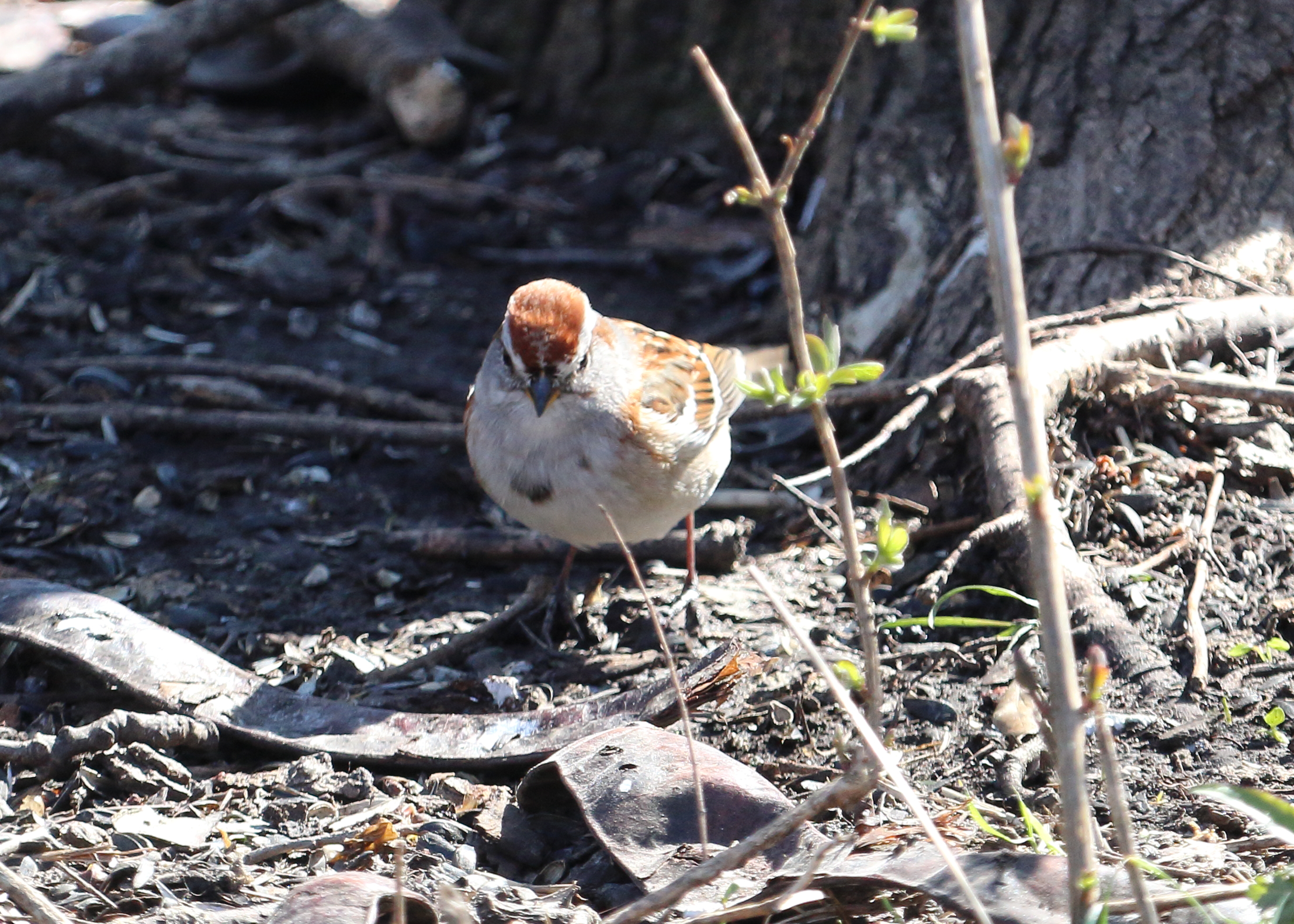
Following the trail up to the blind, I could hear Red-winged Blackbirds and the occasional Brown-headed Cowbird from the brambles despite not being able to see many individuals. The blind was well attended today — mostly Dark-eyed Juncos eating seed on the ground that had fallen from the feeders. The majority were of the slate variety, though one appeared to have a slightly rufous, more Oregonian look. Cardinals came and went along with a number of Common Grackles. A Downy Woodpecker spent considerable time working both the long tube feeder and the suet feeder. For a while it had the place to itself, until an American Tree Sparrow emerged from the grasses along with a handful more Juncos. A trio of White-breasted Nuthatches also made their way to the suet feeder — one promptly chased off the other two and then reveled in having it to itself. Robins and Mourning Doves were also in the area, though neither showed any interest in the feeders.
Campgrounds and Chichaqua Bottoms Greenbelt Trail
Finally I made my way to the campgrounds and the old bridge along the greenbelt trail. On the way I spotted a lone American Tree Sparrow on the power lines near the road — a first for the year, though one I expect will become quite common soon. As I approached the bridge a Red-bellied Woodpecker was moving from tree to tree, and I both saw and heard two Golden-crowned Kinglets. They were tiny and difficult to pick out at first, but a brief flash of yellow gave them away. A Black-capped Chickadee was also working between branches, closely examining several nearby trees — possibly scouting nesting sites. A Northern Flicker made a brief appearance swooping down from above, and a few Canada Geese passed overhead. All in all, a very productive day in the field.
Photos
Conditions
Clear skies, 41°F at the start of my trip and approximately 45°F by the time I finished, with 60% humidity and little to no wind. An abundance of rain in the prior few days had left the waterways full, with ditches and agricultural fields alongside the road still holding water.
What to Watch For
Spring migration in central Iowa is just getting started. Chichaqua Bottoms Greenbelt often hosts various warblers as they make a pitstop on their journey. Waterfowl also be found along the Old Channel that snakes its way through the area as well as the Skunk River found just south.
Species List
- 4 Canada Goose
- 6 Blue-winged Teal
- 1 Redhead
- 3 Rock Pigeon (Feral Pigeon)
- 1 Mourning Dove
- 1 Great Blue Heron
- 1 Turkey Vulture
- 1 Red-headed Woodpecker
- 1 Red-bellied Woodpecker
- 1 Downy Woodpecker
- 1 Hairy Woodpecker
- 2 Northern Flicker
- 1 Black-capped Chickadee
- 1 Tree Swallow
- 2 Golden-crowned Kinglet
- 3 White-breasted Nuthatch
- 2 Eastern Bluebird
- 27 American Robin
- 1 American Tree Sparrow
- 20 Dark-eyed Junco
- 1 Song Sparrow
- 26 Red-winged Blackbird
- 1 Brown-headed Cowbird
- 1 Rusty Blackbird
- 6 Common Grackle
- 5 Northern Cardinal